We have two topics again today, one is on the nature of life and perception, and the other on the work of our ruling faculty with a touch of Providence. I’m going to only focus on one of these today: the ἡγεμονικόν or προαίρεσις.
But first, a seeming diversion which in fact gets us to the point. One of the great treasures of the modern Stoicism movement is Franco Scalenghe. Franco runs Epitteto.com. In addition to a new, modern translation of all of Epictetus works (an immense undertaking) which he offers to the reader without cost (!), he has written five dialogues. These are dialogues in the classical, philosophical sense.
 In these, one of the things discussed is some new work in the field of Epictetus. We have many folks working on Stoicism, and a few novel inventions, but this seems to me to be the most in line with the classical texts while making some valuable movement in it. Franco breaks down the ruling faculty of the mind into three functions, or judges: The Diairesis, the Antidiairesis, and the Counterdiairesis. Franco does an excellent job translating into English, and he has chosen to leave a handful of words in the Greek which may cause confusion in translation. Do not get hung up in the new terminology, the Dialogue makes it clear what’s being discussed. This brings us to the meat of the issue: the ruling faculty, or prohairesis.
Without stealing Franco’s thunder, or misrepresenting anything: the tasks of the various judges are to identify what is up to us and not up to us and to formulate projects in either case. It is the purview of the Diaresis to discriminate between what’s up to us and not, and to formulate projects that are entire up to us in the Epictetan sense; and the Antidiaresis’ is to formulate projects in the other case (i.e. externals) based on the judgement of the former one. When the prohairesis refuses or deludes itself into believing that something which is up to us in fact isn’t, this obfuscation is called Counterdiairesis. An additional trouble arises because Counterdiairesis can also give orders to the Antidiairesis, and thus we forumlate projects incorrectly and are twarted.
If all of that is a bit much, it is merely a one paragraph survey of about 40 pages of Dialogue, but if this idea interests you, I would point you to Franco’s site where you can read the dialogues in several languages, as well as his other works. Franco’s categorization is a very good model for how our ruling faculty works, in my opinion. The added benefit as I see it to the standard formulation is that it gives us three places to look for errors in judgment. We can play a “what if” game, and find out where things may have gone wrong, and maybe then we can fix them. The Dichotomy of Control gives us a powerful tool, but it can often be difficult to identify in which category a given impression or project is rightfully placed. The incorrect solution to this problem is the Trichotomy, but Franco’s model offers (to my mind) the better option.
Marcus notes a few points which tie into this: the first being that our ability to form opinions is paramount (this is a work of the Diairesis in the above framework), and by it alone can you avoid committing errors by making plans contrary to the nature of things (a project ordered by Counterdiaresis).
Franco and Epictetus agree that the prohairesis is the closes thing to a “self” which can be identified, the judge that sits and rules inside the mind/soul. This three-part model is an interesting one, and I recommend it to your study.
After you’ve spent some time with Franco’s Dialogues (and I do suggest more than a cursory reading, there is a lot there to ruminate on), I’d be interested in your thoughts and if you think this is a model you would adopt for your own way of thinking about prohairesis and the hegemonikon.
* * *
If you’ve found some value in the posts here, I humbly request you consider supporting the blog on Patreon. Thank you for your readership.
This post is part of Michel Daw’s Reading Plan of Marcus’Meditations.
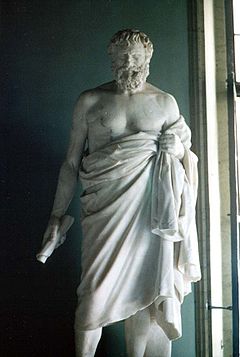 I recently read
  The Cynic then proceeds to attach several luxuries in succession, pointing out the same rule, that a lack of want and glut are not the same. Afterwards, he turns Lycinus’ false piety on its head, and discusses the same purple dye we see from Zeno through Epictetus to Marcus: the
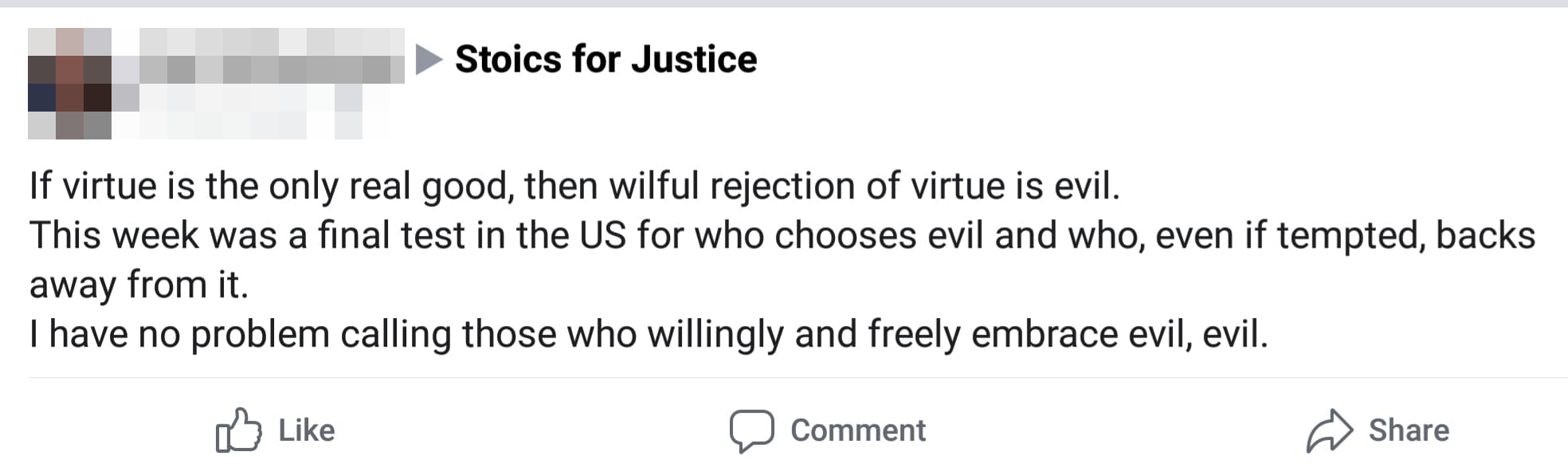
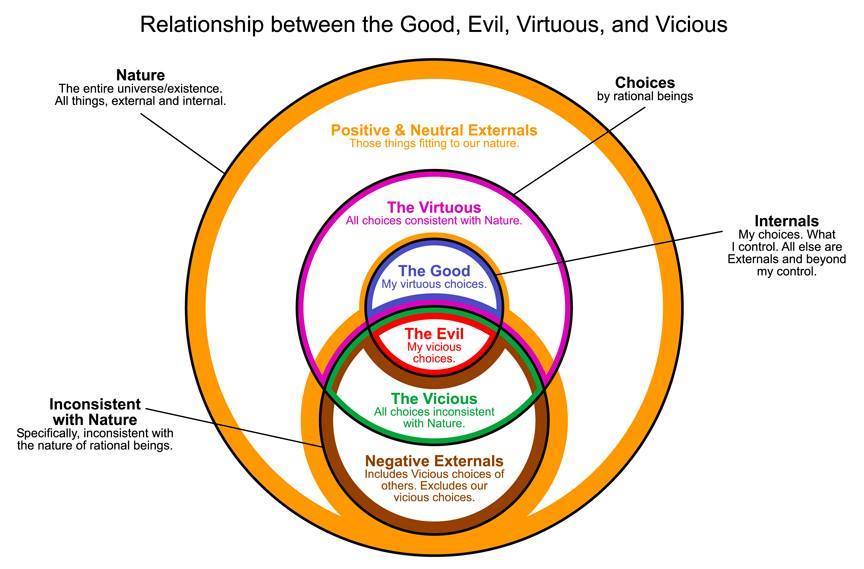
 After a post in
  From the words above, we can look at some English words which help us see what Socrates is doing inside, he’s turning his thoughts inward, examining himself, contemplating, inspecting, looking out for something, etc. His practice involves him standing, sometime shortly, other times for a very long time, and engaging in this work. He stands away, so it’s personal, but he does it wherever he happens to be, so it’s not private, and it is without concern for time or the events of others, so it is not a public display. I hope this delimits the practice somewhat. Additional, this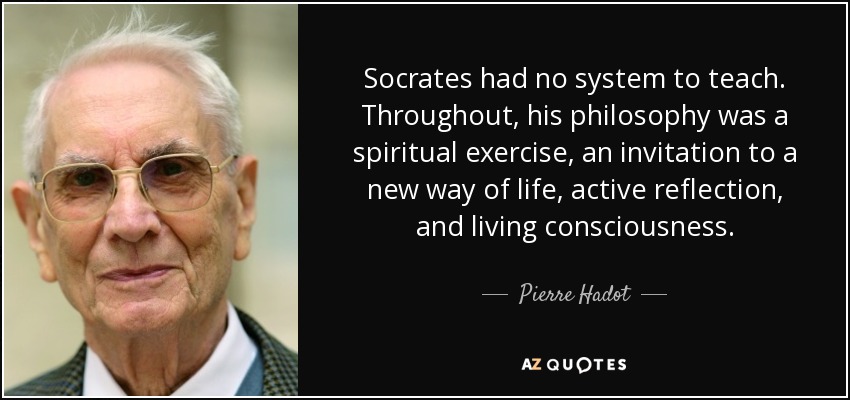
 There’s been a trend with
  Rather, then seeing Stoicism as one more branding for popular social action or someone’s political agenda; we should look at it, as the Ancients did. We should see it as an order for care of the self: to work on ourselves, to secure individual virtue. This trend has existed throughout Western Civilization, even though it is almost always subsumed by collectivist structures. For example, we see it in Christianity, we have both the good works mandate, and the admonition to remove the plank from our own eyes, before touching the speck in our neighbors. So too do we see Stoicism. The commandment of γνῶθι σεαυτόν (know thyself), is sometimes reorganized as ‘recognize thy self,’ (Scalenghe) and is a reminder to realign ourselves to the rational divinity of the soul. We are instructed to seek personal virtue and through that we benefit others. So while we bring people
  The call of ancient philosophy is not one of “come as you are,” but to recognize your own nature, change what needs to be changed about you, and strive towards the human excellence that you were formed by nature to be worthy of possessing. The cost may be high, however. It may be our current way of life, our livelihood, our beliefs, and more besides. This facet is entirely lost in modern, academic philosophy where the only thing required to learn a specific set of patterns to get closer to truth. The Ancients require that you change, not merely learn. The call, then, of the Stoics is while we have duties and obligation in the world polis, the primary focus is on progressing toward virtue. It’s important not to lose sight of that amidst worldly concerns.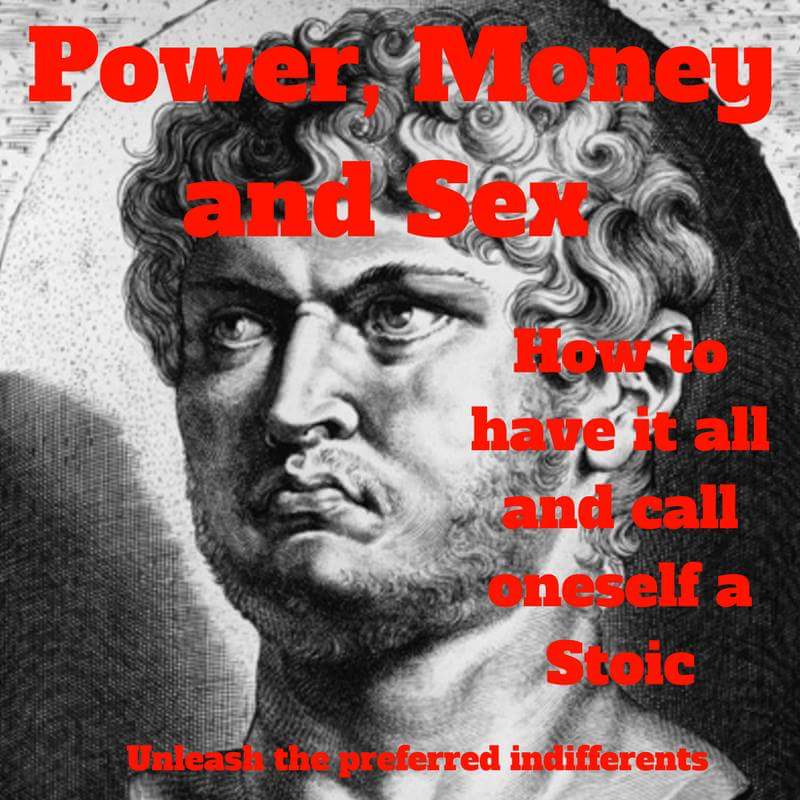
 I have just finished reading the section of Plutarch’s De Moralia “On Curiosity.” The Greek word in question is a bit difficult to translate, so you also see “On Being a Busybody” used.
 No. There is clear taxonomy of what constitutes “Something” for Stoics. Bodies and incorporeals are Something. Everything else is not-Something.

 Mountain Stoic
You must be logged in to post a comment.