International Women’s Day and Musonius Rufus

Standard

women_greek


Today is International Women’s Day, and I thought I would take the time to discuss Musonius Rufus, the role of women in Stoic Philosophy, and the examples we have of them.  Many ancient and modern philosophers discount and discredit the role of women in intellectual pursuits.  For whatever reason, it was often assumed they were less suited to the task, or simply by nature interested in other things.

Musonius, however, takes a different tact.  In Lecture III, he notes that for all of the operative issues regarding philosophy and virtue, men and women have the same foundation on which to build.  For Musonius, both men and women are given by God the gifts of reason.  Their senses, bodies, and minds all work in a similar fashion for everything on which philosophy hinges.  More importantly, both men and women have predisposition for goodness, for virtue.

Keeping in mind, Musonius is speaking in the first century CE, and his arguments are couched in the language and thinking of that time.  He is trying to convince his mostly male audience that the women in their lives would benefit from studying philosophy, for growing in virtue.  He does this by playing to their own biases.

A virtuous person (in this case a female person), would be better suited to all roles and tasks a human being can do.  In the same way that it would make one a better husband, it would make one a better wife.  As it would make better sons, it makes better daughters.  In what conditions would justice, fortitude, wisdom, or courage be a hindrance to a woman?  None!  It’s surely just as valuable in her as anyone else.

Musonius takes this a step further in Lecture IV.  Not only are women capable of virtue, but they should be trained (read: educated) in it.  Not only should they receive education, but the very same education as males.  There is no good reason for Musonius that we should educate boys and girls differently.  This is a fairly radical proposition for the 1st century CE.  The equal access to education was not even a common western value 100 years ago; yet nearly 2000 years ago, Musonius argued for just that very point.  Quite forward thinking in this regard.

His opinions differ, however, when we get to a common crux of human relations:  sexuality.  In Lecture XII, Musonius argues for what seems a very socially conservative view of human sexuality.  Specifically, that it’s appropriate only within marriage, and only for the purposes of procreation.  The reason I mention this, is that he unequivocally states that the prescription is the same for men and women.  While the standard is very strict, it is at least fair.

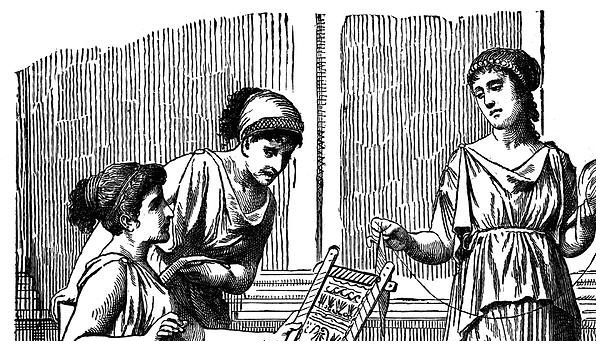
One of the issues which bears pointing out, which many moderns may take umbrage with, is that Musonius argues from a position in which the souls of men and women are the same, but that does not mean that men and women are in all ways equal.  He does note a reasonable division of labor and social roles, however.  One of his interlocutors asks about “women’s work” and how that gets addressed in Lecture IV, lines 16-21.  Musonius argues that when such things are conformable to the general physical nature, it’s appropriate.  The general trend of men’s and women’s build might predispose them to one type of work over another.  For example, he says it’s reasonable that men would do more hard labor outside, and women might work indoors.  In this, the issue is specifically the spinning of yarn.  He does not, however, state this does means that one shouldn’t learn or be able to do the work of the other.

In fact, in specific circumstance, the opposite roles may be more reasonable.  A man might work inside due to his constitution or other mitigating circumstance, and the woman outside and more physically.  Either way, he would not compel one or the other in a specific way.  While general trends exist, the specific applications vary.  A quite liberal approach, I think (not in the political sense of Anglo-American politics, mind you).

Within Stoicism, we either look towards the latter part of the era to the daughter of Cato, or back to the Cynics for specific examples of female philosophers which have come down to us through history.  The first and earlier Hipparchia, the wife of Crates the Cynic and philosopher in her own right, and the second and latter Portia Catonis.

Hipparchia left a life of comfortable wealth, and rigid social mores to marry Crates, the homeless and shameless Cynic.  She discarded everything her society valued and instead sought virtue and freedom, albeit in very unconventional ways.

“I, Hipparchia chose not the tasks of the rich-robed woman, but the manly life of the Cynic. Brooch-clasped tunics, well-clad shoes, and perfumed headscarves pleased me not; But with wallet and fellow staff, together with coarse cloak and bed of hard ground, My name shall be greater than Atalanta: for wisdom is better than mountain running.”

— Hipparchia, Greek Anthology, 7.413

I could not find the original Greek version of the Anthology online to check this, however it is worth noting that the word which is often translated as ‘courage’ can also be translated as “manliness,’ ἀνδρεία (andreia).  This is pure speculation, but I would not be surprised to find that it is this word which is in the original text of the above quote.

Portia may have even been involved in the assassination plot of Caesar, and was at least aware of it.  The recordings of her show a women of firm character, strong beliefs, and the courage of her convictions, even unto her own death by suicide.

“You, my husband, though you trusted my spirit that it would not betray you, nevertheless were distrustful of my body, and your feeling was but human. But I found that my body also can keep silence… Therefore fear not, but tell me all you are concealing from me, for neither fire, nor lashes, nor goads will force me to divulge a word; I was not born to that extent a woman. Hence, if you still distrust me, it is better for me to die than to live; otherwise let no one think me longer the daughter of Cato or your wife.”

— Portia Catonis, Cassius Dio, 44.13.4

The universality of Stoic philosophy is one of its highest selling points, I think.  It calls to the egalitarian nature in the modern westerner, and shows that it has maintained that perspective for a very long time.  Whether it’s simply the vicissitudes of history, or some other reason such as explicit bias, we have few examples of female philosophers and particularly of female Stoics from the classical period.  Nevertheless, the message of Musonius is a hopeful one, offering the fruits of philosophical practice to all rational creatures who embrace her.

CERP: Day 6 – Introduction to The Epistles of Crates (p. 10)

Standard

Introduction to The Epistles of Crates (p. 10)

We’re jumping backwards in the book today, to read the part of the introduction for Pseudo-Crates letters.  The introduction provides a useful context and information for the following Epistles.

Firstly, that anywhere between two and six authors may have contributed, and similar to the actual chronology of the men’s lives, the Crates letters were written after Diogenes’.  Indeed, the introduction suggests that the authors of the Crates letters was familiar with, and even used the Diogenes letters.

This is a neat bit of historical analysis, and I’m looking forward to the letters.  The introduction does carry a caveat, that at least one of the letters has the stamp of the Stoa on it rather than that of Pera.


This is part of the Cynic Epistles Reading Plan.

SLRP: XXXVII. On Allegiance To Virtue and XXXVIII.On Quiet Conversation

Standard

Seneca,

Maybe it’s just “blue car syndrome,” but I’ve come across the word ἀμαθία, (ignorance, stupidity, or folly, the antithesis of σοφία, “wisdom”) four or five times in the past month.  It’s not a word I’d noticed much before, nor paid overly much attention to.

The idea that philosophy is the instrument of fortitude, protection, and freedom is interesting.  Why do you have to sell Lucillius so hard on this?  Is he not already committed?  Maybe the issue is that the fruits of this particular tree are long in ripening?

Your concerns about conversation are also of particular interest to me lately.  Most of Stoic philosophy is happening online these days, and almost all of it through text.  This amounts to the ‘harangues’ which you’ve mentioned.  Shouted at the top of one’s lungs, as it were.

This is not good for sustained development of the school.  We need to get real humans in real life, face to face.  We need Stoic communities.

Farewell.


Part of Michel Daw’s Reading Plan of Seneca’s Letters.

CERP: Day 5 – To Croesus

Standard

IX. Anacharsis to Croesus (p. 47)
Today’s letters has a section which jumped out at me:

“We protect our cattle from wild beasts, and in return receive milk and cheese.  We have weapons, not to attack other people, but to defend ourselves, if it should be necessary.”

The letters of the Pseudo-Anacharsis have seemed to veer fairly significantly from the Cynic route as I understand it.  How do we compare the position (which I agree with, by the way), that we have weapons for defense with the chreia of Diogenes rolling his barrel around the market when the city is under siege?  They seem to be two mutually exclusive positions.

Pseudo-Anacharis harshly criticizes the Greeks, saying that they ascribe their own evils to the Gods, and that they prize nothing which comes from toil, but then they admire toil itself.  The first claim paints them to be like children, the second little better than hypocrites.

 X. Anacharsis to Croesus (p. 51)
No earthly gold, merely the betterment of character.  An interesting parting note.


This is part of the Cynic Epistles Reading Plan.

SLRP: XXXVI. On The Value Of Retirement

Standard

Seneca,

‘Aristo used to say that he preferred a youth of stern disposition to one who was a jolly fellow and agreeable to the crowd. “For,” he added, “wine which, when new, seemed harsh and sour, becomes good wine; but that which tasted well at the vintage cannot stand age.” ‘

I’m not sure I can rightly be called a youth any more, but “of stern disposition” is probably not inappropriate.  Whether that seems to produce a good aged vintage is to be seen.  (;

The crux of the issue regarding ‘retirement’ as you’ve put it, seems to be the stress that’s caused when one is torn between the values of philosophy and the values of society.  If one is expected to heap up a great surfeit of property, money, and status; the person doing the very opposite while working on themselves seems to be doing something vicious.

I suspect the moral here isn’t just for the retirement of one’s twilight years, as we think of it today, but rather the retirement (or renouncing) of the world in general.  To focus on philosophy, we must renounce certain things which the society says we must have to be happy.

Farewell.


Part of Michel Daw’s Reading Plan of Seneca’s Letters.

CERP: Day 4 – To Medocus, Hanno, the Son of the King,Tereus, the Cruel Despot of Thrace, and to Thrasylochus

Standard

III. Anacharsis to the Tyrant Hipparchus (p. 41)

Here, we’re encouraged to take up a “sober and thoughtful” life.  This brings to mind the ὑδροκύων, or Cynic ‘water dog,’ who would only drink water.  The call back to one’s ‘father’s beneficence’ seems to me to be a clear example of the Romanization of Cynicism.  I have a hard time imagining Diogenes relying on the shame from not living up to one’s parents as a motivator to virtue.

IV. Anacharsis to Medocus (p. 41)

φθόνος is the word here used for ‘envy,’ which can be ill-will, malice, or envy of the good fortune of others. And πτόησις is ‘vehement emotion of excitement.’ The distinction I want to draw is between the Stoic πάθος (as passion) and this Cynic word πτόησις which is also translated as passion.

The Stoic passion is also variously translated as suffering, or unhealthy emotion, sometimes even lust.

The Cynic passion is a “fluttering excitement” especially as relates to fear or terror

This is the reason having the bi-lingual texts is really important. When we see the English word ‘passion,’ esp. if we’re coming from a Stoic perspective, we have a less clear view as to what’s being said.

So the message that ‘envy and passion’ are the signs of an inferior soul means something a bit more specific than we might have otherwise thought.

V. Anacharsis to Hanno (p. 43)

Here, Anacharsis is discussing his mode of life, his clothing and food.  Both of those things have been of interest to me over the past year (see:  Philosopher’s Cloak I and II, and Rule of Musonius).  The word we see here as cloak is χλαῖνα, which is simply a large rectangular, blanket-like garment.  It bears some etymological similarity to several Indo-European languages’ word for ‘wool.’

The uniform of the Philosopher is an interesting critter, and that it was such common thing for Cynics that other philosophers were worried they might be mistaken for Cynics is interesting as well.

VI. Anacharsis to the Son of the King (p. 43)

The example of how possessions and freedom are related is the crux of this short piece.  All it takes to ascend to the Cynics’ level of freedom is to renounce those very things holding one back.

VII. Anacharsis to Tereus, the Cruel Despot of Thrace (p. 45)

The adviser role of philosophers to those in power is an interesting one and a dangerous one.  We read that it was common for wealthy and influential folks to have a live-in philosopher, a sort of “nanny of the soul.”

This short letter does not strike me as overly Cynic, however, it seems a more Stoic taste.  The Despot is told to use his sovereignty well, to protect his people.  I would think that a “Citizen of Pera” would rather deny the sovereignty of the Despot, and cast dispersion of the social hierarchies and order which brought him to his position.

VIII. Anacharsis to Thrasylochus (p. 45)

In many respects, dogs seem to understand the cosmos a bit better than the average person.  His kindness and fierceness are always appropriate in a healthy dog.


This is part of the Cynic Epistles Reading Plan.

SLRP: XXXIV. On A Promising Pupil and XXXV.On The Friendship Of Kindred Minds

Standard

Seneca,

I received two of your letters today, and it seems to me that there is a commonality between them.  In the first, you extol the praises of your student, and you remark on the relationship between teacher and student.  In the second, you remark on the relationship between friends, and the bonds of love.

This has me thinking, in many traditions (and based upon your first letter, even in ours) the teacher-student lineage is an important one.  Oftentimes, in historical analysis, we can detect some … creative heritage making.  It’s important to be able to trace back a lineage, for most folks, as some guarantee of authenticity in the teachings.

We Stoics work to draw our lineage to Socrates, as do the Cynics (a bit tenuous, there).

Aside from pedagogical authenticity, I wonder if there’s some good reason for such a pedagogical lineage.  Maybe it’s the case that we’re unable to see our own progress, and even if we’re progressing in the correct ways and correct things.  If that’s the case, then the role of a teacher/mentor is indispensable.

Maybe we moderns are floundering without the rigor which a teacher can provide.  We can see in the writings of Musonius and Epictetus that they lay a firm hold on their students’ education in virtue.

We lack Stoic teachers.  We are all students floundering and splashing around in the pool and we call it swimming.

Farewell.


Part of Michel Daw’s Reading Plan of Seneca’s Letters.

CERP: Day 3: Letters to the Athenians, and Solon.

Standard

I. Anacharsis to the Athenians (p. 37)
Anacharsis beings with an extended argument, showing how the Greeks profess something which is biased and unsubstantiated.  They are hung up on the manner of speech (particularly of foreigners), rather than paying attention to what is said.  He shows the hypocrisy in this, as they use foreign doctors, captains, merchants, etc.

Yet, they still maintain this … for lack of a better term… linguistic nationalism or ethnocentric focus.  I’m reminded of Diogenes’ quip about where in Greece good men might be found, and his response is something like, “In Greece?  Nowhere.  But there are good boys in Sparta.”

Anacharsis also uses the Spartans as an example, citing the commendable way in which they run their affairs coupled with crude Attic.  Anacharsis is challenging the νόμος regarding a Hellenocentric view of progress and society; specific a focus on Athens as Greece-per-se.

It’s funny to note how in latter times, the hallmarks of Greek philosophy were not of the same demos nor ethnos as Athens, coming from Cyprus, Turkey, and Asia minor.  It’s a good reminder that we might fight value elsewhere than the little plot of dirt on which we were born.

II. Anacharsis to Solon (p. 39)
The same theme as above is referenced, in this case in relation to hospitality.  I don’t know enough about the Greek culture of the time, but in the West hospitality is often taken very seriously.  Guest-right, and the obligations of a host are usually traditionally formed and social enforced ideas.

The pseudo-pun about a “Spartan dog” coming from the Scythian Dog… err… Cynic, caused me to chuckle.


This is part of the Cynic Epistles Reading Plan.

SLRP: XXXIII. On The Futility Of Learning Maxims

Standard

Seneca,

“I shall indeed use the old road, but if I find one that makes a shorter cut and is smoother to travel, I shall open the new road. Men who have made these discoveries before us are not our masters, but our guides. Truth lies open for all; it has not yet been monopolized. And there is plenty of it left even for posterity to discover.”

This has long been, ironically, one of my favorite quips from your Letters.  It is true, that at some point we must actually produce ideas of our own, a shock I know.  But as you say, for the young (in philosophy in not in age) learning the dogma of the teachers who have come before is more than useful, it’s necessary.

The world is full of shallow and superficial philosophies, which sound deep and meaningful to the uninitiated.  It’s not challenge to produce such utterances.  The practice and ability of discerning where the the depth actually lies is one worth cultivating, however.

I’m content, at this point, to be the student.  I’m content to do much more listening that talking.  Thank you for the letter.

Farewell.


Part of Michel Daw’s Reading Plan of Seneca’s Letters.

CERP: Day 2 – Introduction to The Epistles of Anacharsis

Standard

Today’s reading is laying the historical groundwork for the following Epistles.  It’s pretty clearly stated that the author is not who it purports to be.  The choice of Anacharsis, being a non-Greek challenging the νόμος of the civilization is a bold one.

The introduction uses some linguistic analysis to determine approximate and relative dates for the authorship.  It claims that the language shows clearly at least two authors.

The distinction between Attic and Koine is one of grammar, word connotation, and relative complexity.  It’s currently above my paygrade to be able to tell them apart, however.

It’s interesting how linguistic analysis can be used in these context, though.  Linguistics (specifically Generative Grammar) is my academic background, so it’s nice to see it here as well.


This is part of the Cynic Epistles Reading Plan.