Camp Seneca: Day 8 – The Third Precept

Standard

“[T]he rational and the irrational appear such in a different way to different persons, just as the good and the bad, the profitable and the unprofitable. For this reason, particularly, we need discipline, in order to learn how to adapt the preconception of the rational and the irrational to the several things conformably to nature.”

— Epictetus, Discourses I.2


The third of the precepts in the Rule of Musonius is:

3.To eat no animal-flesh, with moderation and simply.

We take it upon ourselves to eat no animal-flesh, but those things produced by animals are acceptable.  We take it upon ourselves to eat for health, with self-control (σωφροσύνη), and according to our nature. We take it upon ourselves to train to follow the prescriptions laid out in Musonius’ Lectures XVIII A and XVIII B in regards to food and drink.

On the first day, we discussed food in general.  Musonius devotes a rather long lecture (usually broken into two parts) to food.  The text says its a topic which was often discussed, and that for Musonius the foundation of moderation begins with eating.

For Camp Seneca, I’m interpreting ‘with moderation’ as eating once a day, or sometimes twice if need be.  This is noted in the texts as the frequency with which we are presented with the choices surrounding food.

Eating once a day has gotten much easier since day one, although I did have two meals over the weekend.  Coupled with the vegetarian diet he suggests, I have eaten less than I generally do.  As a result, I’m losing some weight, a little less than 4-lbs last week.

I’m doing my best not to make “Musonius’ vegetarianism” a “pizza, pasta, and rice” diet, and I’m trying to focus on healthier choices.  I’m also trying to avoid “wallowing in the pickles and sauces,” as it were.

I have also been abstaining from alcohol, which is not something explicitly stated in Musonius, but we do have some cautionary tales in Seneca.  As I stated before, the Stoic position on alcohol is not one of complete abstinence, but I’m finding this period useful to me.

I have also cut out caffeine and sugary drinks, excepting an occasional cherry juice for my joints.

So far, the exercise has a been a good one, and the regimen seems like it’s very do-able for a period of time.


This is part of the 2016 iteration of Camp Seneca.

Camp Seneca: Day 4 – The Second Precept

Standard

“Where then is progress? If any of you, withdrawing himself from externals, turns to his own will to exercise it and to improve it by labour, so as to make it conformable to nature, elevated, free, unrestrained, unimpeded, faithful, modest; and if he has learned that he who desires or avoids the things which are not in his power can neither be  faithful nor free, but of necessity he must change with them and be tossed about with them as in a tempest, and of necessity must subject himself to others who have the power to procure or prevent what he desires or would avoid; finally, when he rises in the morning, if he observes and keeps these rules, bathes as a man of fidelity, eats as a modest man; in like manner, if in every matter that occurs he works out his chief principles as the runner does with reference to running, and the trainer of the voice with reference to the voice- this is the man who truly makes progress, and this is the man who has not traveled in vain.”

— Epictetus, Discourses I.4


The second of the precepts in the Rule of Musonius is:

2. To prefer practice to theory alone.

We take it upon ourselves to practice what we learn, for it is the stronger of the two. We take it upon ourselves to follow the prescriptions laid out in Musonius’ Lectures V andLecture VI in regards to practice.

If you’ve read more than three posts on this blog, surely you’ve heard me harp on practice at least once. It’s a perrenial topic at mountainstoic. There’s a reason for that. Practice is the hallmark of the philosopher who is “doing” philosophy as a way of life.

Earlier today, I came across a description of ‘philosophy as a way of life’ on the main Wikipedia article for Stoicism, and it had a small parenthetical: (lex divina). Divine law.

This reminded of the quote that we looked at the other day, on our own Rule of Life.

“Whatever principles you put before you, hold fast to them as laws which it will be impious to transgress. But pay no heed to what any one says of you, for this is something beyond your own control.”

— Epictetus, Enchiridion 50.

This speaks to the weight the ancient Stoics put into practice.  We have from Musonius two Lectures which are fouced generally about training (and many ‘on’ training).  Mainly, we’re looking at Lecture V and Lecture VI.  It’s easy to get bogged down in the intellectual side of Stoicism.  The learning curve is steep, it’s jargony, the level of nuance and detail is high.  I’m learning another language as part of that intellectual exercise of our school.

But getting locked into that solely intellectual mode is not good for those of us seeking to “do” philosophy, and not merely to study it.  It’s needed, but we must remind ourselves (or at least I must remind myself) that we need to prefer practice to theory alone.

In addition to Musonius’ two Lectures, we also have Epictetus.  These three, taken together, provide the broad strokes for what Stoic training/practice should look like.  Musonius lays out that we’re training the body and soul, Epictetus gives us the cautious restriction that we must not do extraordinary things.  The kinds of simple moderations we’re looking at may seem extreme, but they are generally very mild, conformable to nature, and not liable to irreparably injure us.  No beds of nails or withered arms here.  Sleeping on pallet or the floor, dressing miminally and modestly, eating a vegetarian diet and moderately are quite good places to start.

That covers the first part, the training of body and soul together, and for the soul alone, we turn to Epictetus’ Three Τόποι.

Together, these things for the groundwork of a foundational Stoic practice, based in the texts, and easily adaptable for the 21st century.


This is part of the 2016 iteration of Camp Seneca.

Camp Seneca: Day 4- On the First Precept

Standard

“Rufus used to say, “If you have time to waste praising me, I am conscious that what I say is worth nothing.” (So far from applause on our part,) he spoke in such a way that each of us sitting there felt that someone had gone to him and told him our faults, so accurately he touched upon our true characters, so effectively he placed each one’s faults before his eyes.”

— Musonius Fragment XLVII


The first of the precepts in the Rule of Musonius is:

1. To speak plainly, and true.

We take it upon ourselves to speak truly, in the spirit of παρρησία, and with virtue in mind in the spirit of Musonius’ Lecture I in regards to speech.

In Lecture 1, we get an explanation about why many proofs for problem are unnecessary.  If what we say is true, and the listener is of a reasonable mind, we don’t need to beat the dead horse.  The other portion which lays the groundwork for this precept is an idea contained in several of the Fragments, one of which is:

“One begins to lose his hesitation to do unseemly things when one loses his hesitation to speak of them.”

— Fragment XXVI


Here we’re left with the impression that how we use our speech is an indication of our mental state, and indeed, that it can even influence it if we’re not careful.  From these, and other lessons, we understand that how speech is used matters to the practicing philosopher.  We should speak simply then, as Lecture 1 suggests, and we should speak the truth.

Each of the precepts is geared towards a certain mode of life, and an intentional focus in what is often done without clear attention.


This is part of the 2016 iteration of Camp Seneca.

Camp Seneca: Day 3- On the Precepts

Standard

“Whatever principles you put before you, hold fast to them as laws which it will be impious to transgress.  But pay no heed to what any one says of you, for this is something beyond your own control.”

— Epictetus, Enchiridion 50.


Epictetus uses the word ‘precept’ a handful of times.  Six, in fact, in Long’s translation.  In the text, several different words are used in the instance in which Long places the word ‘precept.’  Sometime it’s only hinted at, or filled in like in this example.  Here, he says “[to Zeno is given] the office of teaching precepts.” Higginson uses “[the office] of dogmatical instruction.” What we’re looking at from Arrian is «ὡς Ζήνωνι τὴν διδακαλικὴν καὶ δογματικήν.»  In other instances, other words are used, and the common rendering is ‘precept.’  For this reason, I’ve chosen to use that word in the Rule of Musonius’s Seven Precepts.

So why do we need precepts?  Are we pretending we’re some sort of trappings of other religions?  Are we trying to fluff ourselves up, looking for a tradition which we lack?  All of these criticism might be leveled at the practicing προκόπτων. They should be answered, if possible, and if not set aside.  Look to Epictetus Enchiridion 50, above, and there is the justification for the Stoic, however.

“If you want to improve, be content to be thought foolish and stupid with regard to external things.”

— Epictetus, Enchiridion 13

If you want to improve… in the native Koine, that is εἰ προκόψαι θέλεις.
προκόψαι is the same root whence comes προκόπτων: προκόπτω. Greek often has interesting etymologies, προκόπτω breaks down to something like “to cut away in front” so: “to forward, to work, to make progress.” It can also be rendered as ‘to improve,’  ‘to profit,’ or ‘to advance.’

But, we can also look at it metaphorically, and see the ‘cutting away’ as progress.  Epictetus’ motto is ‘endure and renounce,’ and what is renouncing but a ‘cutting away’ of that which is not needed?  Via negativa, seeks to use the removal of what is not good or what is harmful, to leave what is good and helpful.  Often, you see this in Christian theological circles as a way to understand God by noting what God is not, but you can also find this idea in minimalist and simple living groups.  The second sort is more appropriate for our concerns, since the Stoic conception of divinity doesn’t really allow for “what isn’t god” beyond the vice of rational creatures.

The idea of progress as ‘cutting away’ is an interesting one for the nascent προκόπτων.  It give us a place to start.  The Sage would likely be able to experience all kinds of sense-impressions, thoughts, experiences, etc. without damaging her state of εὐδαιμονία, but we are not yet Sages.  The use of precepts to focus and regiment our training is good one, so long as the focus is on inculcating virtue and progress, and not the actions, inactions, and restrictions themselves.  That’s a narrow edge to walk.

Then, what we’re seeing here, if we want to do the actions of a προκόπτων, we must be prepared for these things. So let the criticisms come. If they’re valid (we may be wrong, we lack Stoic Sages to learn from directly), then accept the criticism and change. In this case, what matters the criticism if it helps us? If they’re not valid, then what does it matter?

We’re advised to formulate philosophical rules for ourselves and adhere to them firmly. As if they were divine laws. Keeping in mind, one of the heaviest charges which could be laid at the time was impiety: the charge which lead to Socrates’ death. And it’s this very charge we’re advised to use as a mental model for our own practice.

That’s not a small thing.

So it’s with this in mind that I’ve used Musonius as a basis for extracting practical precepts. We have in Epictetus the The Three Disciplines, and these are an excellent foundation for Stoic practice. But it’s not the beginning and end. Indeed, we’re advised to train the soul (which The Three Disciplines do well) and also the body and soul together, which the Rule of Musonius does.

Together, these ten points provide an excellent framework for building a modern Stoic practice. And it is with these that I’m training during the 28 day period of Camp Seneca.

I hope that clarifies and grounds the practice of having precepts, and maybe encourages you to build your own system, or to adopt this one.

See you tomorrow.


This is part of the 2016 iteration of Camp Seneca.

Camp Seneca: Day 2- On Intoxicants

Standard

“[D]runkenness is nothing but a condition of insanity purposely assumed.

— Seneca, Moral Letters, LXXXIII. On drunkenness


One of the things that mark this period of training which is not covered by the Rule of Musonius, is the abstaining from intoxicants.  For me, this means alcohol and caffeine.  It’s a fortuitous twist of fate that I stopped taking caffeine about three weeks ago, so I’ll simply be maintaining that.

Musonius doesn’t cover the consumption of alcohol or other intoxicants, for that we look to Seneca.  In the above cited Letter, he makes reference to a syllogism (like many of the early Stoic ones, poorly formed) in which Zeno proclaims the good man will not be a drunkard (note:  this is an interpretation, he states the good man will not get drunk, but I find Seneca’s argument compelling here).  But, also, we have this:

When he was asked why he, though so austere, relaxed at a drinking-party, he said, “Lupins too are bitter, but when they are soaked become sweet.” Hecato too in the second book of his Anecdotes says that he indulged freely at such gatherings. And he would say, “Better to trip with the feet than with the tongue.”

— Diogenes Laertius, Lives of Eminent Philosophers 7.1. Zeno

So we have a bit of confusion on this issue.

Epictetus mentions drunkness on several occasions, mostly in relation to getting in debates with the drunk, or teaching the drunk.  We also have this:

“That a man is a drunkard who takes more than three glasses; and though he be not drunk, he hath exceeded moderation.”

— Epictetus, Fragments No.3 (Carter’s transl.)

So it’s fair to say that we don’t have an total prohibition on the consumption of wine/alcohol.  However, for this period of training, we’ll be abstaining entirely as a practice.  A Stoic need not be a teetotaler, but clearly moderation is key.  Three glasses of wine might be a pretty lenient view of moderation, come to think of it.  Maybe their glasses were smaller than ours?  It seems fair also to say that while a Stoic might consume alcohol, she won’t become habitually drunk.  I think this reasonably extends to other substances which may have varying degrees of legality in different jurisdictions.

So, questions of law and other things aside, for the purpose of this training, we will be abstaining entirely from intoxicants (whatever that may mean for you).  For me, that’s alcohol and caffeine.  If we find this to be difficult for ourselves, that should prompt an internal discussion about moderation, self-control, and unhealthy behaviors.

Looking forward to hearing back from you all on how the training is going.


This is part of the 2016 iteration of Camp Seneca.

Camp Seneca: Day 1- On Food

Standard

Obligatory Disclaimer:  This is not medical, nutritional, or dietary advice.  Seek professional opinions for these things.  

Don’t get hurt, that would make both us sad, Stoic or not.


So, at first one might ask why someone would undertake such a project, the Stoics weren’t ascetics, right?  I think I’ve rehashed that question often enough (Link 1, Link 2, Link 3, Link 4), but it’s still commonly heard, esp. on the internet.

“Therefore upon the learning of the lessons appropriate to each and every excellence, practical training must follow invariably, if indeed from the lessons we have learned we hope to derive any benefit.”

— Musonius Rufus, Lecture VI: ON TRAINING.


That seems pretty straightforward to me, and coupled with:

“And since habit has established a strong predominance, because we have acquired the habit of turning our will to get and our will to avoid only to what lies outside our control, we must set a contrary habit to counteract the former, and where impressions are most likely to go wrong there employ training as an antidote.”

— Epictetus, Discourses III.12:  ON TRAINING


And lest we forget our training period’s namesake:

“When shall you put it all into practice? For it is not sufficient merely to commit these things to memory, like other matters; they must be practically tested. He is not happy who only knows them, but he who does them.”

— Seneca, Moral Letters LXXV. ON THE DISEASES OF THE SOUL.


So, that issue (I hope) being resolved, let’s look at the most startling of the Camp Seneca practices for this period.  Restricting food to one meal a day.  Why might we do that, and more importantly, why is this a Stoic practice at all?  For this, we’re going to turn to Musonius.

“First of all,
      (1) the man who eats more than he ought does wrong, and
      (2) the man who eats in undue haste no less, and also
      (3) the man who wallows in the pickles and sauces, and
      (4) the man who prefers the sweeter foods to the more healthful ones, and
      (5) the man who does not serve food of the same kind or amount to his guests as to himself.
 There is still another wrong in connection with eating,
      (6) when we indulge in it at an unseasonable time, and although there is something else we ought to do, we put it aside in order to eat.”

— Musonius Rufus, Lecture Lecture XVIIIB ON FOOD


As Musonius (via his student Lucius) notes that unlike some rarer circumstance, we are faced with eating daily, and sometimes twice a day.  Maybe Musonius is a bit more optimistic about whence we’re starting, because now most westerners eat three meals daily, and there is often snacking between.  Some health folks suggest six smaller meals throughout the day (although this is challenged in some health/fitness quarters).  Regardless of where we fall in the “three to six range,” it is fair to say this is a challenge we are faced with often.

In the second portion of the lecture on food, Musonius notes a variety of places one can go wrong during a meal.  I’ve broken them down and numbered them for ease.  He notes six opportunities for failure in self-control.  It is my experience that number (5) is practically a non-issue, the politeness culture and sense of hospitality that is common in American and European communities(I’m sure others as well, but this is the extent of my experience) renders it moot.  Guests are usually given the best of what’s available, and seconds or even thirds are often foisted on them with or without consent.  God help the person who doesn’t want food while visiting a grandma, even is she’s not your grandma!

But, the others are ripe for our inspection.

Restricting ourselves (for a time) to one meal a day will cause a shift of attention.  Many meals are taken thoughtlessly.  The working lunch, the sandwich in the car on the way to an event, “what are we doing for dinner tonight, honey?”  When we pare down the opportunities, we will necessarily be a bit more mindful in our choices with what remains.  Additionally, this should help solve (1) and (6).

However, my suspicion is that items (2), (3), and (4) may actually become a greater issue on which we have to focus.  This is not problematic, though.  Now, you’ll notice, we’ve cut down our problem areas in regards to food by half.  We only have three things to which we must really pay attention.

As a youngster, I spent some time in the summer with a religious community,  a Benedictine monastery in the Illinois Valley.  Meal time is very regulated (unsurprisingly).  Meals are taken in silence, and there are several readings which are read aloud.  If you look at other traditions across the globe, mealtime is given an equally weighty treatment.  An effect of this sort of formalism is a necessary slowing down of the drives and desires in regards to food.  In a quiet, meditative environment we are able to focus more on what we’re doing.

This takes care of items (2) and (3).

Of course, in an intentional community, with community meal preparation, (4) is often taken care of by someone else.  We do not have this luxury, however.  We are required to exercise an extra portion of σωφροσύνη.  In item (4) we may be especially challenged.  There are a couple  of modes from which we can choose.

Any choice we make here should be in consult with medical personnel, and be tailored to our health needs.  Individual responsibility is required.

The first, being that in having a fairly severe caloric deficit, we might choose foods which are calorically denser.  This is an added difficulty, for one of the Musonian precepts is to avoid animal-flesh as food.  This is common to see in Buddhists monks (most of whom outside of China, Japan, and Korea) are not vegetarian; and I’m told they can put away a goodly amount of food in their one meal.

The second option, if health allows for it, is to simply go without.  What we are doing is a form of intermittent fasting, and there a wide variety of programs.  Some who will fast for 16 hours, and feed for 8.  Or 20 and 4, or what have you.  Restricting ourselves to one meal is on the end of the IF spectrum, where effectively we’ll be fasting for 22 or 23 hours a day, and adding the fact that some will be abstaining from meat, it’s not going to be an easy thing.  To date, I think the longest I’ve intentionally gone without food (while not sick) is something like 36 hours.  I do expect this to be a challenge for me, as I have a lot of work to do on the ‘moderation with food’ issue, as my belt size will attest.

It is my hope that this exercise is a good context for which to have a greater experiential understanding of self-control.  It may also contain opportunities for courage and fortitude.  It is of the utmost importance that we remember all of our training must be motivated towards virtue:  or simply put, we’re in the wrong.

So, if you’re adopting my program for Camp Seneca, let me know in the comments.  If you using some other regimen let me know also in the comments.


This is part of the 2016 iteration of Camp Seneca.

Camp Seneca: Virtual Stoic Retreat

Standard

camp_seneca.png

“Set aside a certain number of days, during which you shall be content with the scantiest and cheapest fare, with coarse and rough dress, saying to yourself the while: “Is this the condition that I feared?”  It is precisely in times of immunity from care that the soul should toughen itself beforehand for occasions of greater stress, and it is while Fortune is kind that it should fortify itself against her violence.  In days of peace the soldier performs manoeuvres, throws up earthworks with no enemy in sight, and wearies himself by gratuitous toil, in order that he may be equal to unavoidable toil.

Let the pallet be a real one, and the coarse cloak; let the bread be hard and grimy. Endure all this for three or four days at a time, sometimes for more, so that it may be a test of yourself instead of a mere hobby.”

— Seneca, Moral Letters XVIII. ON FESTIVALS AND FASTING.


I’m setting about an explicit period to re-double my efforts in regards to training.
It’ll be a 28 day period from 13-June to 11-July.

I’ll be keeping my seven precepts for the Stoic προκόπτων, which are based on the Lectures of Musonius Rufus.  Additionally I will be restricting food to one meal a day, and abstaining from intoxicants.

Anyone else who would like to join, just add in the comments and state what protocol you’re following. I’ll update in this thread periodically as well.

I’m also keeping a thread at the /r/Asceticism sub.


On Ascetic Training

Standard

Jean-Léon_Gérôme_-_Diogenes_-_Walters_37131The classical Stoics lay out several clear statements and arguments regarding ascetic training in the practice of philosophy.  Now, the word “ascetic” often has broad and specific connotations, not all of which are appropriate for our concerns here, and some actually at counter position to our purposes.
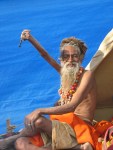
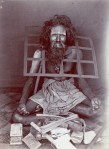
So let me begin, the type of ascetic regimen that is practiced (for instance) in some parts of India by “matted hair” type ascetics is not what we are discussing.  You can find photos of men covered in mud, sitting with one arm raised until it withers, staring at the sun until blind, or wearing an iron collar for decades.

It is not my place to say these folks are wrong, but this is not something condoned by Stoicism.  These acts are simply not our practice.  Epictetus states so, clearly, in Discourses III.12:

“We ought not to train ourselves in unnatural or extraordinary actions, for in that case we who claim to be philosophers shall be no better than mountebanks. For it is difficult to walk on a tight-rope, and not only difficult but dangerous as well…”

The operative words here are “unnatural or extraordinary”  practice; I offer that suggestions like the above fall under this category.  However, the current society (and in the eyes of the classics, theirs as well) is so indulged that true moderation appears to be tortuous.  But that is a wrong understanding.  Moderation is not a torture or mortification of the flesh.  Indeed, that practice’s motivation is not even remotely close to ours.  ἄσκησις (áskēsis) means training or exercise, and that is our purpose:  not torture.

So what kind of training is appropriate for the philosopher?  Musonius gives us his answer in Lecture VI, On Training:

“Since it so happens that the human being is not soul alone, nor body alone, but a kind of synthesis of the two, the person in training must take care of both, the better part, the soul, more zealously; as is fitting, but also of the other, if he shall not be found lacking in any part that constitutes man.”

We have two categories of training then, those which affect the ‘soul-and-body-together’ and those which affect the ‘soul-alone.’

  • Soul and Body:
    • Designed to instill discipline to both by exposure to:
      • cold and heat
      • thirst and hunger
      • meager rations
      • hard beds
      • avoidance of pleasure
      • patience under suffering (note: not causing suffering)
  • Soul Alone:
    • Designed to build the habit of handling impressions appropriately
      • to have ready to mind the proofs regarding apparent and real goods and evils
      • distinguish between apparent and real goods and evils
      • practice in not avoiding apparent evils
      • practice in not pursuing apparent goods
      • practice in avoiding real evils
      • practice in pursuing real goods.

There is nothing extraordinary here, nothing which should damage the body irreparably.  It is simple moderation.  Musonius suggests the simplest clothes (the philosopher’s cloak), a lacto-vegetarian diet, and control of our sexual faculties.

Epictetus explains the purpose of such practices, like the above guidelines which Musonius laid out:

“I am inclined to pleasure: in order to train myself I will incline beyond measure in the opposite direction. I am disposed to avoid trouble: I will harden and train my impressions to this end, that my will to avoid may hold aloof from everything of this kind.”

— Discourse III.12

Yet, we’re given fair warning as well, Epictetus and Musonius both state such practical training is required for progress.  Epictetus gives us a measure, however, for when our zealousness* for progress has become something else:

“But if their object is display, they are the marks of one who has swerved from the right line, whose aims are alien, one who is looking for spectators to say, ‘What a great man!’ This is why Apollonius was right in saying, ‘If you wish to train for your soul’s sake, when you are thirsty in hot weather take a mouthful of cold water and spit it out and tell no one!'”

Epictetus warns us at the beginning of III.12 and at the end for this concern, and it should not be taken lightly.  It would be a special kind of shameful for training conducive to virtue to itself become a vice.

Musonius goes on in Lectures 12, 18 (A and B), 19, 20, and 21 to lay down explicit prescriptions for the training of philosophers, as I briefly mentioned above.  I have extracted and condensed my understanding of that regimen as The Rule of Musonius.

He is less specific on the trainings for soul alone.   From the notes taken by his student, it seems that it was assumed they would be well known.  Unfortunately, we seem to lack that instruction from him.  We do have Epictetus’ exposition on the Disciplines of Assent, Desire, and Action and the concept of προσοχή (prosochē, attention).  So while it’s not as clearly spelled out, we have the tools to recreate both types of training.

“He was always earnestly urging those who were associated with him to make practical application of his teachings, using some such arguments as the following. Virtue, he said, is not simply theoretical knowledge, but it is practical application as well, just like the arts of medicine and music.  Therefore, as the physician and the musician not only must master the theoretical side of their respective arts but must also train themselves to act according to their principles, so a man who wishes to become good not only must be thoroughly familiar with the precepts which are conducive to virtue but must also be earnest and zealous in applying these principles.”

— Musonius, Lecture VI

I would be interested in your own distillations of a Stoic ascetic regimen, so feel free to comment, or comment a link.


* “zealous” in Greek is φιλοπόνως (filo-ponos), ‘lover of labor/hardship.’


A Stoic rap? Sure, why not.

Standard

So a dear friend of mine sent me a video for a song which is more introspective, more important, than most popular music today is.  I watched the video and read the lyrics, and the poetry and content is moving and thought-provoking.

I felt moved to respond with what might be Stoic advice in kind.


The question about life is insane
It’s not the struggle, the hardship, the pain.
Humans are here, and we’re reasonable.
We’re here to find the truth, the logic; the main
Thing we need to see is virtue and vice.,
To know what’s good, what’s bad, we’re fraught for lack of advice.
 
But it isn’t heavenly reward,
so much as it’s our internal words
Where we can find, not rewind, what we’ve got to fill the time.
And our morals, our lessons, come from our minds.
It’s not divine, but it’s time to set aside the rhythm and rhyme.
To discover for ourselves, and not for fear of heaven nor hell.
 
It’s our nature, our fate, to reason and love, and sometimes to hate.
There’s nothing outside, but the universe is god, and the cosmos divine.
Seek to stand straight, not straightened. 
Sometimes we bend, we break, but our fate is the same, we’re waitin’
For some truth,  for nature, for god.

But we can’t see where we are, without the perspective,
Our natures are reflective, and not for god we’re awed, we stand and plod
through life without direction. 
But for men and women, we’re a collection of projections
Given no quarter other than what we find,
and the line is divine, to fill the time with prime, sublime

Excellence.

Voluntary austerity

Standard

So, in the vein of voluntary exposure to those things which we might not classify as indifferents, I was scheduled at work for 8 hours on, 8 hours off, then 12 hours on.  I have a 45-minute commute each day each direction.

I was scheduled to work from 2pm to 10pm, then to be back at work again in uniform, armed, and ready to go by 6am.  If I travel home (I live and work in two different cities) , I don’t get much sleep.  So, I was going to sleep at work, on a cot, in a back room. However, I was informed that for some reason (which was kind of made up) that I shouldn’t do that.  Not wanting to deal with the hassle, I decided to make the best of it.

So, I slept in my car in the parking lot.  This allowed me to sleep in until 0530 instead of getting up at 0430. It saved me travel time, and I got to bed about 45 minutes earlier than I would had I gone home.  All in all, turning what would have been about four hours’ sleep into darn near seven hours.

My knees and back aren’t thanking me much, this new vehicle isn’t nearly as comfortable to sleep in as my last one, but I now know that if I need to, I certainly can sleep there.  I also ate the same food for four straight meals, focused more on the fuel of the body than the preference for the tastes.

So, working my way through a 12-hr shift after the end of a 70-hour work week, I’m in better spirits than I might have first thought.