A Stoic Argument Against Circumcision

Standard

To begin, I am discussing elective circumcision of newborn males.  Circumcision can be a remedy for certain medical problems, and that stands outside the purview of our discussion here.  Elective surgeries, are by definition, not medically necessary, and that is the focus of this argument.

About one-third of the world’s male population is circumcised.  This figure might be surprising, until one notes that a full 70% of that number are Muslim, for whom it is a religious prescription, as it is for Jews and certain Orthodox Christian sects.  Again, these folks fall outside of our purview for the discussion.  While it might be admirable to try and convince such folks that their practices are harmful, arguments against religious prescriptions are often difficult, as the value of obedience to the rule will often be higher than the ‘rightness’ of the thing to human eyes.

Instead, we are focusing on Stoics, and how from that perspective, we should interact with circumcision.  There’s an interesting amount of double-think which occurs in this matter.  If you use the phrase “female circumcision” you will likely be corrected by “female genital mutilation.”  However, were you to say “male genital mutilation,” you will probably be met with confused looks.  Indeed, if you attempt to draw a parallel, “removing of parts of the sexual organs without consent and for medically vacuous purposes,” you will immediately find the person to suddenly be very knowledgeable about the “health benefits” and possibly even the ‘aesthetic value’ of the practice.  Keeping in mind that the plural of anecdote isn’t ‘data’, it’s been my experience that these arguments usually come from women.

In the US, where this is less of a religious issue, the practice of circumcision is a cultural one.  “My son should look like me,” is the common reasoning from men, and dubious health benefits from women.  Plus:  “We’ve always done this.”

To properly frame the issue in a Stoic context, there are a few things to note:

  • The lack of medical necessity,
  • The false argument of omnium consensu,
  • A fiduciary responsibility to protect the bodily integrity of our children,
  • Our motto of “Live according to nature,”
  • And the vehemence in the Stoic arguments against beard cutting

The lack of medical necessity is a definitional issue, as presented in the first part of this post, and I won’t go over it again.  The omnium consensu issue arises when you often hear the issue brought up that “If we don’t circumcise our son, he’ll stand out,” or “he should look like me.”  It is not a universal practice, being a 30-33% minority of males, and of those, a 70% majority represented by one religious sect shows that it is firmly a minority practice.  In this instance, omnium consensu (the prevalence of a universal practice), is clearly not relevant.  What we actually have is an Appeal to Popularity, a fallacy.  Basically, “all the cool kids are doing it.”

Thankfully, the phrase of generations of mothers and grandmothers of “If everyone were jumping off a cliff, would you jump too?”  is not, “If everyone were cutting off bits of their son’s penises, would you cut too?”  Because we know the answer to the latter one, as a survey from 1999-2002 showed that 79% of US males were circumcised.  This is down from 91% in the 1970s. (!)

Next, we address the issues of ownership and property integrity.  Our bodies are our property, we have the highest and best claim to its disposition.  Parents have a fiduciary responsibility towards their non-adult children’s health, wellness, minds, and bodies.  What they do not have is ownership.  An owner may alter, destroy, or otherwise dispose of property in any way he or she sees fit.  A custodian, however, does not have this moral right.  Instead, he or she has an obligation to the actual owners to maintain the status of the property in question, to the highest and best means possible.

A parent might choose to have a child’s leg amputated in the event of a serious accident, like a crushing injury followed by infection.  To protect the life of the child, cutting away the leg is appropriate.  Their responsibility to the life of the child clearly trumps the bodily integrity obligations, as there is no integrity if the child dies from gangrene.

Yet, we’re not looking at that type of situation at all in regards to circumcision, which almost always is medically elective.  Instead, for reasons of perceived social pressure, the parents are choosing to cut away portions of the child’s body for perceived social ease or aesthetics.

This is grossly inappropriate.  It is instead, the obligation of a parent to protect the bodily integrity of their children until they are of an age to make such choices for him or herself, assuming the threat of death is not present (as ex. above).

Let us move on to the issue of our motto, to”live according to nature.”  No creature is born with extra parts which as a standard matter of course need to be surgically removed.  Let alone, that in a small percentage of cases, errors or malpractice can result in severe and lasting damage to the child.  Indeed, were this a natural practice, we would see it in greater than 30% of the world’s population, and it would be spread across more diverse groups: namely closer to 100% than it is to 0%.

Lastly, I have a speculative argument from analogy.  Musonius and Epictetus both argue that men should not cut away the beard, that to do so is impious.  Their argument points to the sexual dimorphism in other species:  the lion’s mane, the rooster’s comb, etc.  They say that the beard is nature’s symbol of the male in mankind.  In that, it is then inappropriate to make themselves ‘not like men’ in the pursuit of fashion or for other purposes not involving an illness.

Indeed, the only reason why we cut the hair at all is probably because it does not hurt.  If it were to hurt to the cut hair, I don’t think we would do it as we do today.  Yet, circumcision does hurt, and oftentimes the infant isn’t even given medication to lessen the pain.

Can you imagine someone coming up to Epictetus, with his beard freshly plucked out, smooth as a newborn, and asking his opinion on cutting off a portion of son’s penis?  I can imagine the reply would be clear, and probably not softly delivered.

No, if the Stoics were so against the cutting off of the ‘symbol’ of masculinity as put there by nature, surely they would also be against cutting off portions of the masculine organ itself.

Many American males are already circumcised, and there’s no changing that.  It may have been done thoughtlessly, or for perceived ‘good reasons.’  But, we who have examined the issue from a philosophic and Stoic perspective can make a change.

Will it be difficult to explain to our sons why we look different than they do?  Folks assume it will be, but I don’t actually think that is so.   In fact, part of the job of parents is to have difficult conversations for the well being of their children.  That fear, even if it exists and even if it is real, should be put aside.  It doesn’t contribute to our virtue.

When we’re asked, upon bathing or changing, why we look different, it is up to us to explain the problem in language the child can comprehend.  Children can understand quite a bit more than we often give them credit for when the appropriate language is chosen.

“Some people remove this part from their babies.  My parents chose that for me, but I decided it was your choice.  When you’re an adult, you may chose to have that surgery, or to be as you are naturally.  You were a health baby, and there was no need for it.  It’s your body, and it should be your choice.”

It’s as simple as that.  Of course, their grandparents love us and them as well, and of course their bodies are safe.  As parents we should simply chose to protect our children’s bodily integrity, and protect their opportunities for their own choices in the future.

The issue of male circumcision is surprisingly a controversial one, and it is my hope that this piece provides the opportunity to re-examine cultural practices through the lens of philosophy and rational thinking, and not merely unthinking tradition or popular appeals.

SLRP: XVI. On Philosophy, The Guide Of Life

Standard

Seneca,

“You must persevere, must develop new strength by continuous study, until that which is only a good inclination becomes a good settled purpose”

This seems to tie into ‘virtue’ being able to be described as ‘consistent character.’  It is certainly do-able to make the advisable choice once, or even twice, or for a period of days.

Keeping one’s thoughts in order, laboring under the guide of philosophy, day in and day out for weeks, months, years seems to be another thing entirely.

That consistency which is built over those longer terms is much harder, and it often seems to fall back on the fundamentals.  The basic practices and precept of our school are both the cure, and where the problem lies.

Indeed, it’s easy to delude one’s self in lofty thoughts and grandiose philosophy, while letting the simple and basic practices slip away.  Thank you for the timely reminder.

Farewell.


Part of Michel Daw’s Reading Plan of Seneca’s Letters.

On Ascetic Training

Standard

Jean-Léon_Gérôme_-_Diogenes_-_Walters_37131The classical Stoics lay out several clear statements and arguments regarding ascetic training in the practice of philosophy.  Now, the word “ascetic” often has broad and specific connotations, not all of which are appropriate for our concerns here, and some actually at counter position to our purposes.

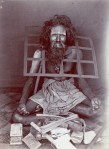
So let me begin, the type of ascetic regimen that is practiced (for instance) in some parts of India by “matted hair” type ascetics is not what we are discussing.  You can find photos of men covered in mud, sitting with one arm raised until it withers, staring at the sun until blind, or wearing an iron collar for decades.

It is not my place to say these folks are wrong, but this is not something condoned by Stoicism.  These acts are simply not our practice.  Epictetus states so, clearly, in Discourses III.12:

“We ought not to train ourselves in unnatural or extraordinary actions, for in that case we who claim to be philosophers shall be no better than mountebanks. For it is difficult to walk on a tight-rope, and not only difficult but dangerous as well…”

The operative words here are “unnatural or extraordinary”  practice; I offer that suggestions like the above fall under this category.  However, the current society (and in the eyes of the classics, theirs as well) is so indulged that true moderation appears to be tortuous.  But that is a wrong understanding.  Moderation is not a torture or mortification of the flesh.  Indeed, that practice’s motivation is not even remotely close to ours.  ἄσκησις (áskēsis) means training or exercise, and that is our purpose:  not torture.

So what kind of training is appropriate for the philosopher?  Musonius gives us his answer in Lecture VI, On Training:

“Since it so happens that the human being is not soul alone, nor body alone, but a kind of synthesis of the two, the person in training must take care of both, the better part, the soul, more zealously; as is fitting, but also of the other, if he shall not be found lacking in any part that constitutes man.”

We have two categories of training then, those which affect the ‘soul-and-body-together’ and those which affect the ‘soul-alone.’

  • Soul and Body:
    • Designed to instill discipline to both by exposure to:
      • cold and heat
      • thirst and hunger
      • meager rations
      • hard beds
      • avoidance of pleasure
      • patience under suffering (note: not causing suffering)
  • Soul Alone:
    • Designed to build the habit of handling impressions appropriately
      • to have ready to mind the proofs regarding apparent and real goods and evils
      • distinguish between apparent and real goods and evils
      • practice in not avoiding apparent evils
      • practice in not pursuing apparent goods
      • practice in avoiding real evils
      • practice in pursuing real goods.

There is nothing extraordinary here, nothing which should damage the body irreparably.  It is simple moderation.  Musonius suggests the simplest clothes (the philosopher’s cloak), a lacto-vegetarian diet, and control of our sexual faculties.

Epictetus explains the purpose of such practices, like the above guidelines which Musonius laid out:

“I am inclined to pleasure: in order to train myself I will incline beyond measure in the opposite direction. I am disposed to avoid trouble: I will harden and train my impressions to this end, that my will to avoid may hold aloof from everything of this kind.”

— Discourse III.12

Yet, we’re given fair warning as well, Epictetus and Musonius both state such practical training is required for progress.  Epictetus gives us a measure, however, for when our zealousness* for progress has become something else:

“But if their object is display, they are the marks of one who has swerved from the right line, whose aims are alien, one who is looking for spectators to say, ‘What a great man!’ This is why Apollonius was right in saying, ‘If you wish to train for your soul’s sake, when you are thirsty in hot weather take a mouthful of cold water and spit it out and tell no one!'”

Epictetus warns us at the beginning of III.12 and at the end for this concern, and it should not be taken lightly.  It would be a special kind of shameful for training conducive to virtue to itself become a vice.

Musonius goes on in Lectures 12, 18 (A and B), 19, 20, and 21 to lay down explicit prescriptions for the training of philosophers, as I briefly mentioned above.  I have extracted and condensed my understanding of that regimen as The Rule of Musonius.

He is less specific on the trainings for soul alone.   From the notes taken by his student, it seems that it was assumed they would be well known.  Unfortunately, we seem to lack that instruction from him.  We do have Epictetus’ exposition on the Disciplines of Assent, Desire, and Action and the concept of προσοχή (prosochē, attention).  So while it’s not as clearly spelled out, we have the tools to recreate both types of training.

“He was always earnestly urging those who were associated with him to make practical application of his teachings, using some such arguments as the following. Virtue, he said, is not simply theoretical knowledge, but it is practical application as well, just like the arts of medicine and music.  Therefore, as the physician and the musician not only must master the theoretical side of their respective arts but must also train themselves to act according to their principles, so a man who wishes to become good not only must be thoroughly familiar with the precepts which are conducive to virtue but must also be earnest and zealous in applying these principles.”

— Musonius, Lecture VI

I would be interested in your own distillations of a Stoic ascetic regimen, so feel free to comment, or comment a link.


* “zealous” in Greek is φιλοπόνως (filo-ponos), ‘lover of labor/hardship.’


SLRP: XV. On Brawn And Brains

Standard

Seneca,

Today’s letter broached several topics:  exercise, study, food, worry over the future, and more besides.  I’ve been thinking about the first four specifically the past few days.

Your suggestions for healthy and philosophically motivated exercise are timely, and I’ll be thinking about them much today.  I’m thinking they will mesh well with my recreation of, as Marcus calls it, ‘The Grecian Regimen” from the suggestions of Musonius.

Thanks for the tidbit!

Farewell.


Part of Michel Daw’s Reading Plan of Seneca’s Letters.

Impressions and the OODA Loop

Standard

If you hang around .mil, LEO, or civilian self-defense circles you’ll eventually hear reference to the OODA Loop.  OODA Loops are not the most recent in a line of tactic-cool cereal for the cool guys.  The OODA Loop is a mental model for human decision making, especially in crisis.  Now, professionals in psychology and decision making make take issue, but as a pedagogical tool and mental model for the non-specialist, it’s the standard of training.

A quick and dirty primer on the OODA Loop:
The OODA Loop is a decision making loop that one must go through to come to action in times of crisis.  It is broken down into four parts which give it the acronym.


OODA_Loop

Image Credit: ArtOfManliness.com

  • Observe
  • Orient
  • Decide
  • Act

First, you must make an observation.  This is a witnessing of some fact about reality.  It might be “A man is approaching me,” or “An object rests on the sidewalk,” or “I’ve fallen to the ground.”  The observation is neutral.  It simply is.

Next, is the orienting phase.  You must put the observation into the proper context.  You must come to know ‘what the observation means.’

  • “A man is approaching me.”
    • Observation:  A man is walking in a baggy jacket, hands in his pockets, shoulders rolled forward.  He is on a vector to cross paths with me.  We make eye contact, and he speeds up.
      • Orientation 1:  I’ve just exited a store, his jacket is light, appears to be unlined.  It’s winter, and the wind and snow are driving.  This man is cold, and is going inside.
      • Orientation 2:  I’m lost on a city street at night.  The street is practically empty, and I’ve seen this man before two blocks back.  He might be threat.

Next comes the deciding phase.  Once you have oriented to the situation, and you understand the context in which the observation occurs, you must decide on the proper course of action.

  • “A man is approaching me.”
    • Decide:
      • O1:  Step aside and hold the door as courtesy.
      • O2:  Options…
        • A:  Cross the street.
        • B:  Speak to the man, “Hey buddy, nice night, eh?”
        • C:  Speak to the man, “Watch out for that bus!”
        • D:  Prepare to fight

Now, the action.  You do the thing.

The thing about the OODA Loop is that we engage in this hundreds of times per day, and if for some reason the loop gets interrupted, it must start over.  So, if we can ‘get inside’ the OODA Loop of someone else, we’ll catch them off-guard.  Most folks take between 0.25 and 1.5 seconds to go through one OODA Loop.  Speaking to a would-be attacker my kick his or her OODA Loop back to the start, giving you more time to act.

So, what does this have to do with Stoicism and with φαντασία in particular?  I think the Cycle of Assent matches up fairly well:

  1.  The ἡγεμονικόν (hêgemonikon) is presented with an impression. (Observe)
  2.  An almost-instantaneous value judgment is attached, and a proposition is made. (Orient)
  3. The proposition is weighed, you either assent, deny, or suspend judgment. (Decide)
  4. You either experience a passion, form an intention, desire or aversion, etc.  (Act)

This is a modification of Sellars’ distillation of the four stages of Assent:

1. The soul receives an impression via the sense organs or the mind/memory;
2. An “almost” involuntary and unconscious value judgment is attached;
3.  The ruling faculty is presented with a proposition composed of the perceptual data and the unconscious value judgment from #2;
4. One either assents or denies the impression/proposition.

As practicing Stoics practicing the Discipline of Assent, if one is already familiar with the OODA Loop (or finds it a useful mnemonic device), this similarity in models may be helpful.

Thoughts?

SLRP: XIV. Reasons For Withdrawing (Part 2: 9 – 18)

Standard

“Sometimes a vessel perishes in harbour; but what do you think happens on the open sea? And how much more beset with danger that man would be, who even in his leisure is not secure, if he were busily working at many things!”

Ah, dear Seneca, a ship may be safer in the harbor, but that’s not what ships are for.

I do have to say, I quite like the phrase “thinking-shop” I may have to make use of that, if you’ll permit the borrowing.

“One must therefore take refuge in philosophy; this pursuit, not only in the eyes of good men, but also in the eyes of those who are even moderately bad, is a sort of protecting emblem.”

For much of the West today, this has changed, I’m sorry to report.  Philosophers are seen as academics indulging in intellectual masturbation at best, or at worst is a waste of time.  It’s quite sad.

Possibly, this is due to the fact that there are very few people “doing” philosophy.  “Philosophy as a way of life” is enjoying a very mild upswing, nominally, at least.

I do heartily agree that the desires of the mob are something we should be wary of.  I’m not sure it’s within our power to not excite the greed or hostility in others, but it is fair to say we should live modestly.  Yet, we should most definetly avoid the toxins of hate, greed, and scorn.

My interest in the ascetic regimen of Musonius is kicking back up, so we’ll see how that goes over the next few weeks and months.  I’ll report back, if you’re interested.

Farewell.


Part of Michel Daw’s Reading Plan of Seneca’s Letters.

On ἀρετή and troubling translations

Standard

The most common English translation for the Koine word ἀρετή that you’re likely to come across is ‘virtue.’  This translation presents a couple of problems, which I’ll address.

Firstly, the word virtue in English has lots of baggage from its use in the Judeo-Christian tradition.  Secondly, on top of that, there are certain conotations which make the word less than dynamic.  Generally, when we hear virtue, even in a philosophical context, the conotation relegates the topic to moral and social applications.  While it’s true that there is a moral and social component, it is not the entire story.

The next most common translation is ‘excellence,’ and this one does quite a bit better.  In Diogenes Laertius 7.90, he says “Excellence (ἀρετή) is in a general sense the perfection of each thing.”

For humans, as rational critters, that means the perfection of our rational faculties.

In, The Stoic Sage by Brouwer (which I’m reading currently), the ‘dispositional definition’ of ἀρετή is discussed.  The dispositional definition has to do with character, and for this case, the measure is consistency.

It’s a pretty well-known standard that excellence is a kind of knowledge (Gr:  ἐπιστήμη).  In the case of moral virtue, that can be cloudy.  What does it mean to know a virtue?  However, when viewed through the dispositional lens of ‘consistent character’ and ‘excellence’ the knowledge and praxis components of ἀρετή are more clear.

SLRP: XIV. Reasons For Withdrawing (Part 1: 1 – 8)

Standard

Seneca,

I think I’ve said before in our letters that for the past year, thereabouts, I’ve been mostly a student of Musonius Rufus with some Epictetus tossed in for good measure.  Coming from that perspective, I must disagree with your statement of the previous letter which strikes me as decidedly Epicurean in nature.

“Let us, however, in so far as we can, avoid discomforts as well as dangers, and withdraw to safe ground, by thinking continually how we may repel all objects of fear.”

I would counter it with this Fragment of Musonius, in which he uses the metric of the Epicurean to show the position is untenable in regards to pleasure being a good, and avoidance of pain an evil:

“If one were to measure what is agreeable by the standard of pleasure, nothing would be pleasanter than self-control; and if one were to measure what is to be avoided by pain, nothing would be more painful than lack of self-control.”

— Musonius, Fragment XXIV

Musonius’ example, even by the Epicurean criteria, proves the Stoic doctrine.  How can it be then, dear Seneca, that you would hail back to the Epicurean valuation?  In the same piece, you note that an abundance of worry over the body results in a lesser valuation of virtue, yet you say one should bend to that same pressure and withdraw from worldly suffering.

Did not Socrates and Cato, and yes even your own self, choose death over the will of the tyrant?  How can it be then, that the Sage would avoid the civil authorities?  Your own integrity demanded death over acquiescence,and a truly noble one it was, Sir.

No, the Sage would do what is fitting:  which might mean exile, challenging the civil authorities in the face of injustice, or even death.

Come back to the porch, Seneca, we miss you!  (;

Farewell.


Part of Michel Daw’s Reading Plan of Seneca’s Letters.

Chris Fisher: The Piety of Epictetus

Link

Chris has been working on a series of very well written, and heavily researched articles on Stoic Piety for the past few weeks.  His most recent iteration, is on Epictetus.  

The religious character of The Discourses is apparent to anyone who has read them, and despite the modern trend of wanting to discount any form of non-atheism in Stoicism the case for the religious nature of the school is well founded.

Head on over, give his article a read.  It’s worth the time.