“Waste no more time arguing about what a good man should be. Be one.”
— Meditations X.16
One of the things which often seems to be forgotten, is that the title which is traditionally given to what we call “Meditations” in English is Τὰ εἰς ἑαυτόν or “Things to one’s self” and sometimes just “To himself.” Marcus never intends his notes to be read by another, and certainly that matters when we’re interpreting his writings.
Below are a few reasons why the above passage (and others like it) likely don’t apply to the modern Stoic student.
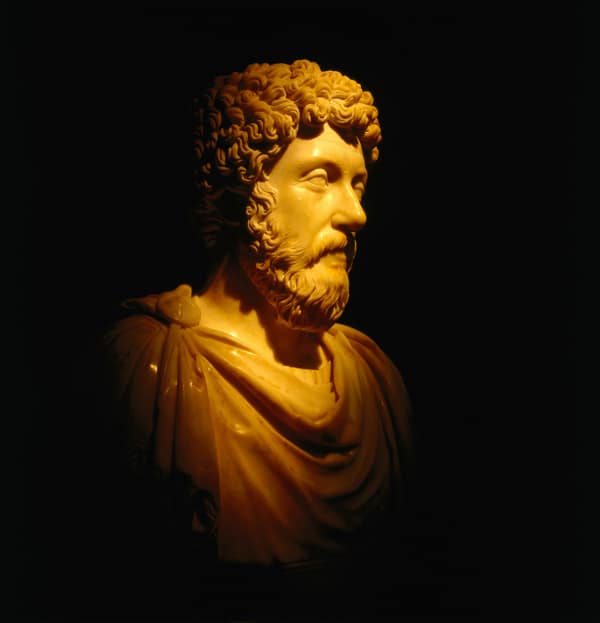
1. Marcus was already firmly studied in Stoicism.
Marcus had several private tutors in philosophy from a young age. Whether it be Fronto or Rusticus, during the formative years of his life he had a solid philosophical influence. Most of us come to philosophy in adulthood, and we lack the decades of grounding that Marcus had. When he admonishes himself from study to action, he knows this. It simply doesn’t apply to the nascent προκόπτων in the same way. We ought to prefer practice to theory alone, but we do need the theory.
2. Marcus had training in Stoic moderation (ἄσκησις )
From an early age, Marcus was used to the Greek regimen of moderation and simplicity. Early on in the Meditations, he recounts how his mother and others would try and dissuade him from these practices. Most of the 21st century Stoic practitioners are not preforming the physical training that we see over and over in Musonius, Epictetus, and Marcus. True Stoic moderation appears extreme to those of us steeped in a level of indulgence that would be staggering to the ancients. For this reason, Marcus was already practiced in the things which for most of us are mere theory, cold showers aside.
3. Marcus was in a particular and rare circumstance.
As the Emperor of a large empire, Marcus had external demands and duties which are radically different from ours. This is not to enter a value judgment about which are better, easier, or preferable, it’s a mere fact that they are different. The Roman Stoics had more of a focus on roles and duties than their predecessors; and Marcus would have felt this strongly. For him, his time is better spent in embodying the virtues he has already come to know than it would be in further study. We, however, have need to inculcate these points in our daily lives, and this requires study and learning.
4. Marcus had access to resources we do not (probably).
It is generally accepted that the works of Epictetus to which Marcus had been introduced was probably some version of Arrian’s notes: The Discourses. We also know that there were four additional Books which have been lost to time. It seems likely to me that Marcus had access to those lost books. Since we are working with only a fraction of the Stoic record, we have to work more intensely and diligently on them than those who had access to more. Marcus may admonish himself to have fewer books, but he had access to ones we do not.
5. Marcus was living and operating in a world where Stoicism was a major social influence.
Any educated Roman of Marcus’ time would have been familiar with Stoic philosophy, at least the broad strokes. Greek philosophy helped shape Rome in profound and serious ways. In may ways, Marcus practice while extraordinary for an Emperor, was relatively common in and of itself. We students of ancient philosophy, especially those of us seeking to make philosophy a way of life, are outliers. Rather than stepping into the well worn ruts of those who have gone before, we find ourselves forging new paths, and carving roads into a wilderness 2,000 years deep. This distance of time requires different strategies, tools, and work than Marcus himself needed.
It seems to me that there is much to gain from Marcus’ writings, but it is also important to take from them judiciously. I cannot help but see parallel struggles (and sometimes the exact same ones) in Marcus’ writings as I have in my own life. Yet some are unique to his time, others unique to his person. So when Marcus tells himself to pair down his bookshelf, waste no more time in contemplation, etc., these might not be true for us.
I certainly encourage frequent reading of the work, and a careful application of a critical rule which shifts what’s applicable to us and what is not. So before you set aside something which might seriously affect your training, consider whether that in fact applies to you.


 If Diogenes had hated humanity, why would he have spent his entire philosophical life among them, providing an example in extremis of what was sufficient for virtue? Why would he search for an honest, or true human? Why would he try to make them better than they were, and better even than they saw themselves?
 The Cynic, then, instead of being an asocial hermit finds herself in the thick of it as much as a Stoic! She’s trying for many of the same social benefits. The difference then comes down to the doctrine of indifferent things, which the Stoics espouse and the Cynics deny.
 A group I recently was exposed to by a follower of the blog and Patron is
  I’m reminded of this for two reasons, one being that the Stoics denied intermediary states between virtue and vice, thus the depth of the water to the man is in irrelevant: he’s drowning regardless. But also in a way I don’t think I’ve seen anyone express before.
 As a kid, and if I’m honest often as an adult, we’d play a game to see who could hold their breath for the entirety of the tunnel as passengers in the car. The mind knows it can breath at any time, you just have to give up and lose. You also know that you’re not really in any danger. Nevertheless, about 2/3 of the way through, an existential panic creeps in. The muscles around the ribs burn with the effort of stillness. A pressure builds in the head. You can trick this a little by exhaling slightly, in little controlled puffs and not inhaling. Tricking the system into thinking it’s breathing again. But this only buys you an extra couple of seconds. If you’re here, you’re already close to your breaking point. If you can’t make out features at the end of the tunnel, and you’re puffing out, you’re not going to make it.
 In these, one of the things discussed is some new work in the field of Epictetus. We have many folks working on Stoicism, and a few novel inventions, but this seems to me to be the most in line with the classical texts while making some valuable movement in it. Franco breaks down the ruling faculty of the mind into three functions, or judges: The Diairesis, the Antidiairesis, and the Counterdiairesis. Franco does an excellent job translating into English, and he has chosen to leave a handful of words in the Greek which may cause confusion in translation. Do not get hung up in the new terminology, the Dialogue makes it clear what’s being discussed. This brings us to the meat of the issue: the ruling faculty, or prohairesis.


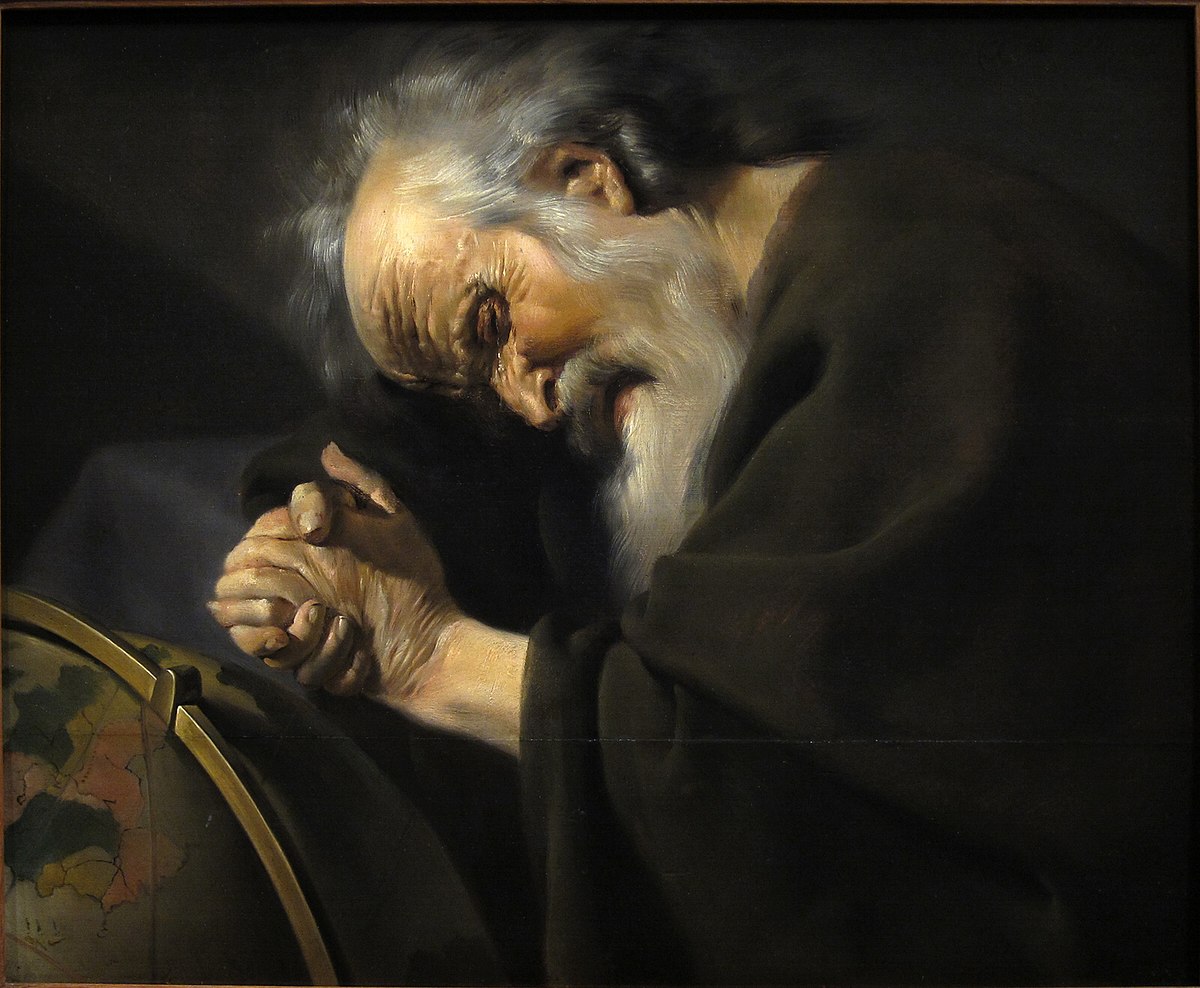 We have two topics today, both dealing with speculation and the color of our thoughts. In the first, Marcus lists some of the paragons of the mind on classical antiquity: Hippocrates, Heraclitus, et al. Despite how these contributed to the social weal, they passed away. There’s a tinge of irony here, in some of these deaths as well: the manner or context of their dying contrasted with the focus of their study, or speculation. Marcus is using this a meditation on death and on meaning. We might spend a significant portion of our time speculating on (for his concern and ours) virtue, yet the sand continues to trickle through the hour glass, and we have no idea how much is left.
 One of the traits (we may go even so far as to say virtues) of the Cynic is shamelessness or ἀναίδεια in the Greek. Although Diogenes was held in relatively high esteem by the early Christian church, they drew a line here, generally, and didn’t think overly well of the practice. Diogenes’ line of reasoning is, that anything which is in accordance with nature cannot be evil (the Stoics would agree), and anything which isn’t evil has no need to be hidden. Ah, we see here the seeds of Marcus’ reasoning then, too!
 We can take the Cynic ἀναίδεια in a Stoic fashion. We can change or remove those behaviors and thoughts that would lead to a rightful feeling of shame, correct them before they work their way out into speech and deed. Which of our thoughts would rightfully feel shameful about? These are the things to work on.
 Mountain Stoic
You must be logged in to post a comment.